
 Footy Tips
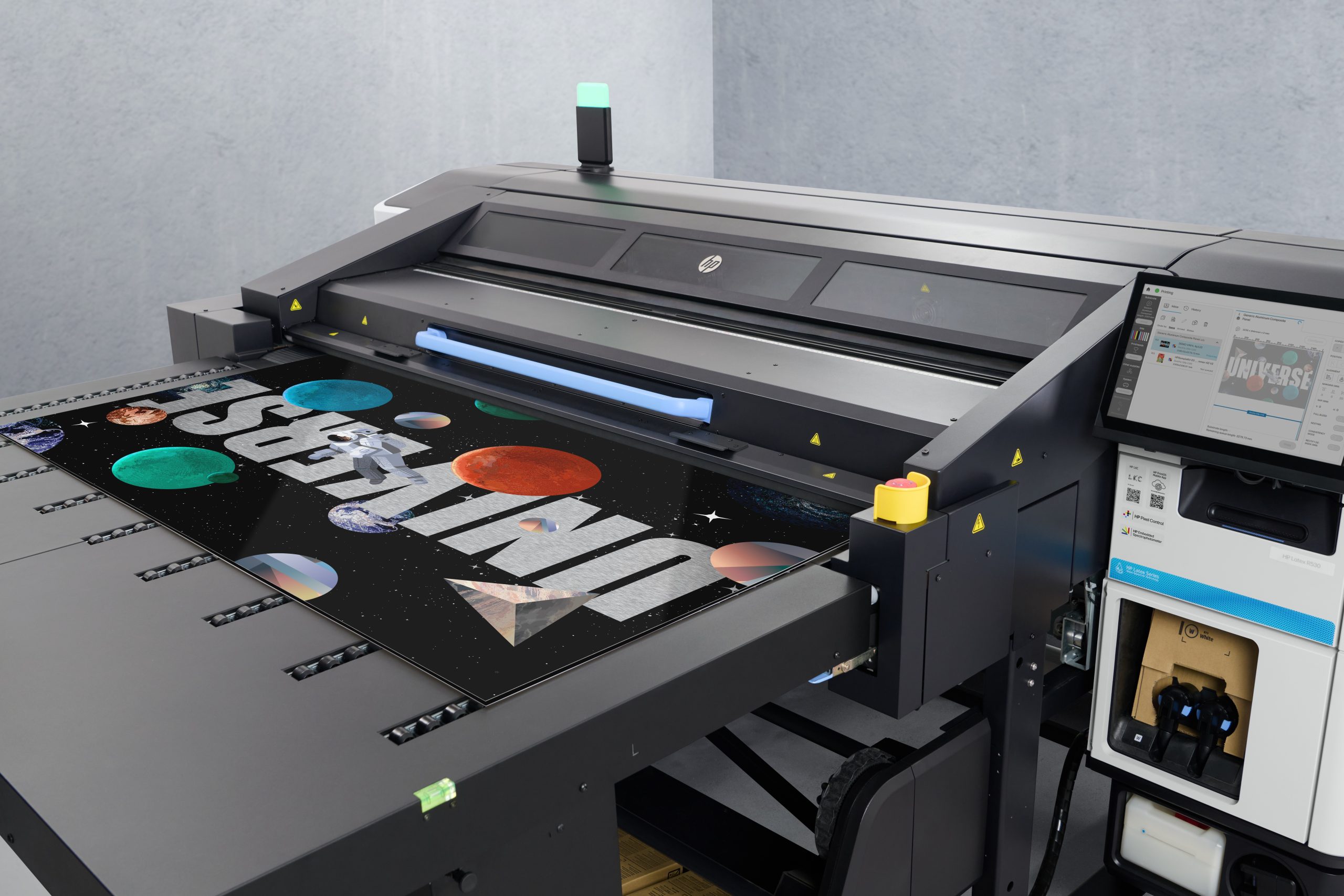
Most growing print businesses face the same crossroads. Rigid substrate work is where the margins are; acrylics, foamboard, aluminium composite, corflute – but a full industrial flatbed means major capital outlay, a large floor commitment and operational complexity most mid-sized shops aren’t ready for. The HP Latex R530 resolves that tension. It delivers genuine flatbed capability in a compact hybrid format, without forcing you ro choose between rigid and felxible production.
What is the HP Latex R530?
The HP Latex R530 is an all-in-one printer. It handles both rigid substrates and flexible roll media from a single machine. It’s not a flatbed with a roll-media workaround, and it’s not a roll-to-roll with a rigid tray. It’s purpose-built to switch between both, in a footprint that fits a working print shop rather than a warehouse.
For commercial printers who want to move into rigid work without replacing their existing workflow, that distinction matters. The HP Latex R530 expands your production capability. It doesn’t disrupt it.
Print direct on rigid and eliminate print-and-mount
Traditional rigid signage production means printing on self-adhesive vinyl, then laminating it to a board. It’s time-consuming. It introduces points of failure, such as seams, adhesive inconsistencies, substrate warping, and the result rarely matches what direct printing delivers.
The R530 prints straight onto the substrate. The output is cleaner. The process is faster. And the finished product is one clients can see the difference in – which means it’s easier to justify a higher price point.
White ink is standard, not an add-on
White ink ships as part of the R530’s standard configuration. That matters commercially. White ink capability is what separates commodity print from high-margin applications – clear acrylics with white underprint, backlit rigid signage, dark-substrate graphics with vibrant spot colour.
HP’s water-based Latex white ink is formulated to resist yellowing over time. For clients in retail, events and architectural signage who need long-lived output, that durability is a genuine selling point.
Built for a working print shop
Conventional flatbeds typically demand over 28 square metres of floor space. For most mid-sized print businesses, that rules them out entirely. The R530’s compact design brings flatbed capability into spaces that couldn’t previously accommodate it.
The jobs you can win now
With the R530 in your production lineup, you can take on:
- Retail signage printed direct to rigid substrates
- Architectural graphics on aluminium composite panels
- Point-of -sale displays on acrylic
- Exhibition graphics on foamboard
- Vehicle graphics on flexible roll media
- Short-run packaging prototypes
If you’ve been referring rigid-substrate jobs to competitors, every one of those referrals is revenue the R530 brings back in-house.
The investment case
A full industrial flatbed is a significant commitment in capital, floor space and operational complexity. The R530 changes that calculation. It delivers flatbed capability at a more accessible price point, in a fraction of the footprint, using the same HP Latex technology, media ecosystem, and PrintOS software platform that underpins the broader HP Latex range.
For businesses where rigid work is on the horizon but an industrial flatbef is a bigger step than they’re ready to take, the R530 is the right move now – and a foundation to grow from.
Talk to Ball & Doggett about the HP Latex R530
Ball & Doggett supports every stage of your investment – from inital consultation and live demonstrations a the Experience Hub in Brendale, QLD, through to installation, operator training, and ongoing media supply. Our wide-format specialists know the R530’s capability in depth and can map it directly to your production floor and client mix.
Contact our equipment specialists or book a demonstration at the Experience Hub to see the R530 in action