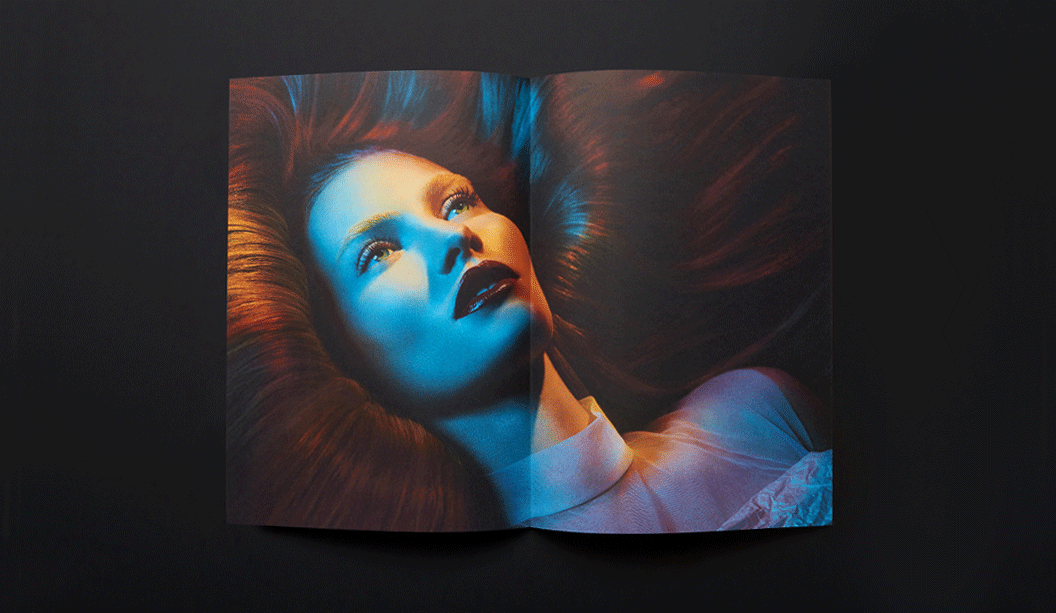
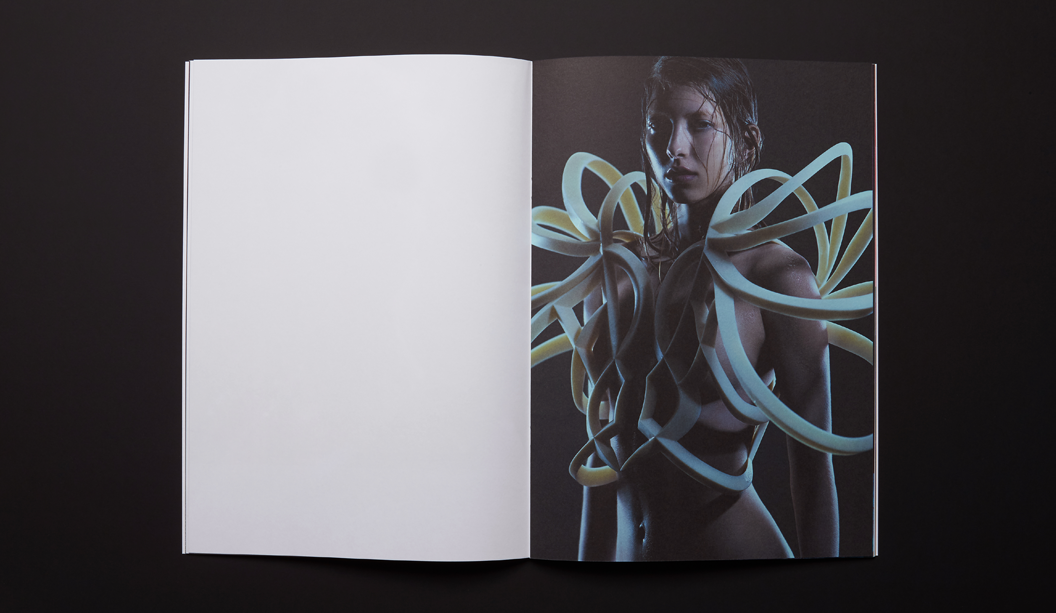
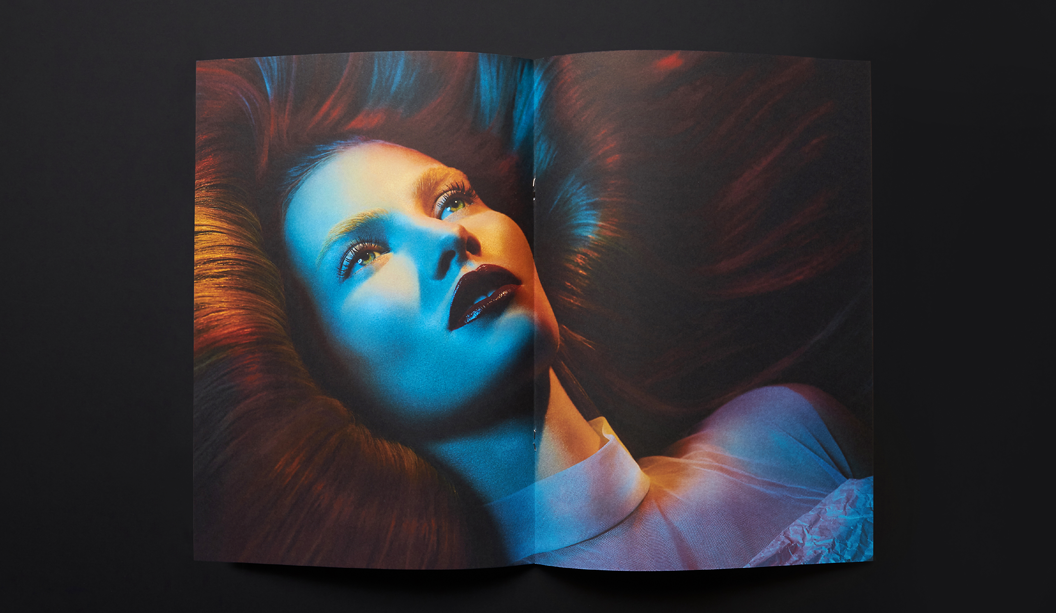
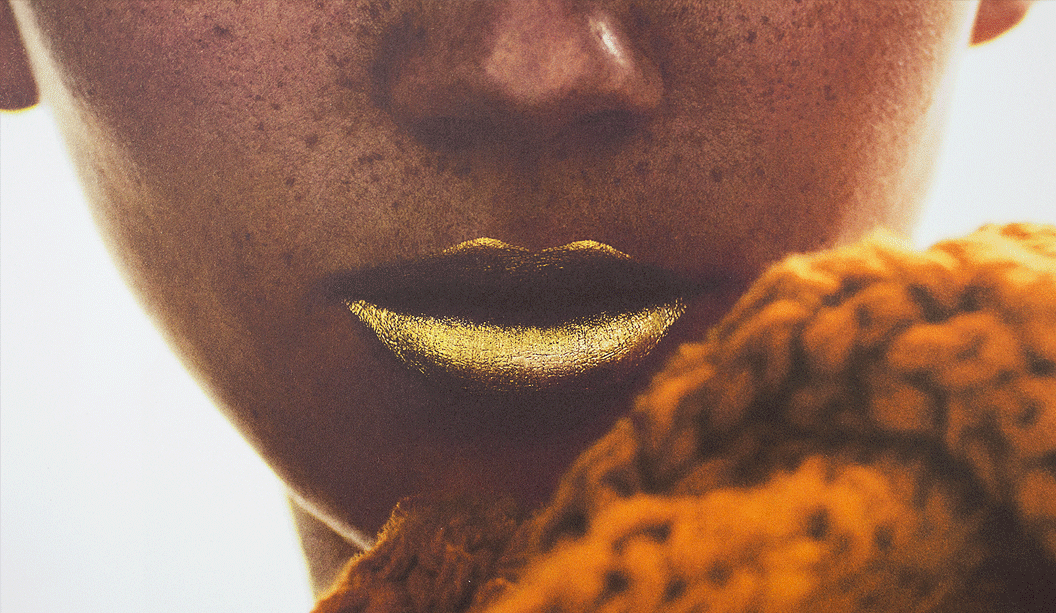
1. Perform ‘Under Colour Removal’ (UCR) on your files.
Under Colour removal (UCR) is a process whereby you eliminate overlapping yellow, magenta and cyan that would normally add to a dark neutral (black) and replace it with black ink only ie a ‘Full Black’. This is done during the colour separation process. Replace the coloured inks with black in shadowy or neutral areas to reduce the risk of mottling or a muddy look which can happen with excessive ink coverage.
2. Use the right colour profile.
Start with your images in RGB then convert to CMYK uncoated profile. Domestic printers work with CMYK and are therefore able to create a narrower range of colours.
3. Choose the right paper to match your imagery.
We know, we know, it seems so obvious but sometimes it’s still not considered. When reviewing your proofs, keep the shade of paper you’re actually printing on in mind eg if using a creamy white paper you may want to reduce the yellow (especially with skin tones). With a blue white paper you might want to take out some cyan. Proofs are often on a coated paper so consider this too. Best papers to use if printing lots of photography with skin tones is all papers really, but these kinds of images really lend themselves to blue-white uncoated papers.
4. Ask to see samples.
We have loads of samples on-hand. Some with specials, embellishments, specialty covers etc and if we don’t have it, we’ll find it! Let your paper specialist know the desired result you want and they’ll work backwards with you to find the best paper and print method. They really know their stuff when it comes to matching paper with imagery.
5. Print production is key.
This involves preparing the files as mentioned, checking the proof and also making sure that when on press, you consider some things eg you can make minor adjustments to colour and density but mostly this should be done in the pre press stage. And most importantly, allow for dry back. When on press, approve the sheet that comes off and then ensure you allow for dry back, so increase the ink pressure by about 10%.
CASE STUDY 1:
Ogilvy Brazil & Life Support Group: ‘This Poster is HIV Positive’
Agency Ogilvy Brazil partnered with organisation Life Support Group to deliver a consumer education and awareness campaign in São Paulo, Brazil.
OBJECTIVE:
The campaign set out to break down the stigma and confusion surrounding HIV/AIDS and how the virus is transmitted.
METHODOLOGY:
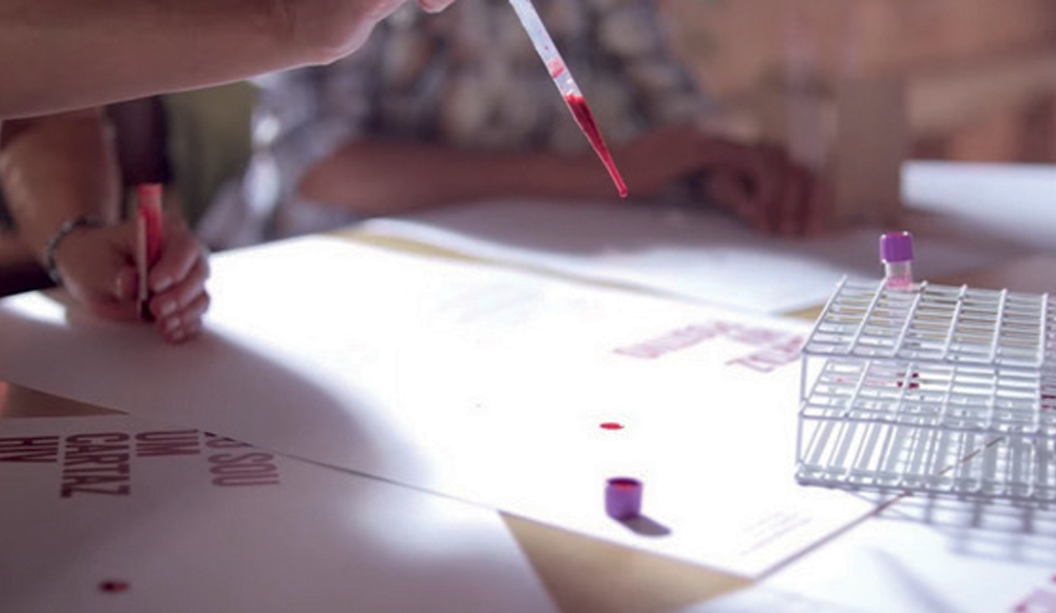
Posters were created that contained 1 drop of blood from an HIV positive individual and distributed throughout São Paulo. The text on the posters read, “My measurements are 40 by 60 centimetres. I was printed on high brightness paper. And my weight is 250 grams. I’m just like any other poster. Except for one thing: I’m HIV positive.. I’m living with the virus. At this point you may be taking a step back, wondering if I offer any danger.”
RESULTS:
The campaign was effective at educating readers that HIV can’t survive for more than an hour outside the human body, so like the poster, HIV positive individuals are completely harmless. The campaign provided highly emotional responses from the public, with some touching and even kissing the poster after reading it, proving that the message was received and the misinformation was corrected.
“The poster humanizes the problem and brings people together for the cause, showing that it’s possible to live in a prejudice-free society.”
OBJECTIVE:
To create a poster that reflects the unwavering depth of support from All Blacks fans, as part of Adidas New Zealand’s annual limited-edition posters.
METHODOLOGY:
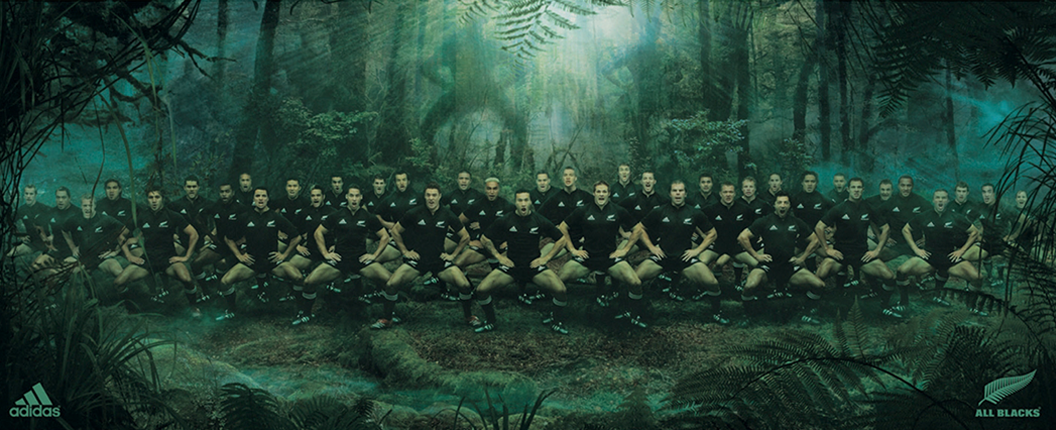
All Blacks players each donated a sample of blood that was combined with ink to produce 8000 special edition posters. The digitally imposed posters featured the All Blacks team performing the haka in Fiordland National Park. Slogans such as “Stand in black. It’s in our blood” and “Rugby. It runs through your veins” were used in the campaign. These ‘Bonded by Blood’ edition posters came with a certificate of authentication and given to those fans who purchased an All Blacks jersey.
RESULTS:
The posters were very well received within the community, achieving the goal of enhancing national pride and connection with the All Blacks team. This campaign allowed the All Blacks to acknowledge the depth of support received by fans over the years, and cultivate a strong sense of community.
“Adidas believes rugby is an essential part of New Zealand’s DNA and we wanted to show how the players and their supporters are inextricably linked – how supporting the All Blacks is in our blood.”
Craig Waugh, Adidas New Zealand’s Marketing Manager
CONCLUSION:
Both of these campaigns are excellent examples of how companies are pushing the limits with print, yielding results. Incorporating blood into the posters ink created a strong tangible and sensory experience, forging a deeper emotional response to the campaigns. Thus generating both a memorable and impactful experience. Using print media to appeal and relate to consumer’s senses proves much more effective than just using images and text to get the message across. Print allows brands to communicate their values and message in a highly engaging and emotional manner.
Thanks to Kellie Northwood, Executive Director of VoPP/Two Sides Australia for allowing us to republish this case study, made available to us as Foundation Sponsors of TSA Limited, the publishers of the VoPP (Value of Paper and Print) report. Find out more via www.valueofpaperandprint.com.au.
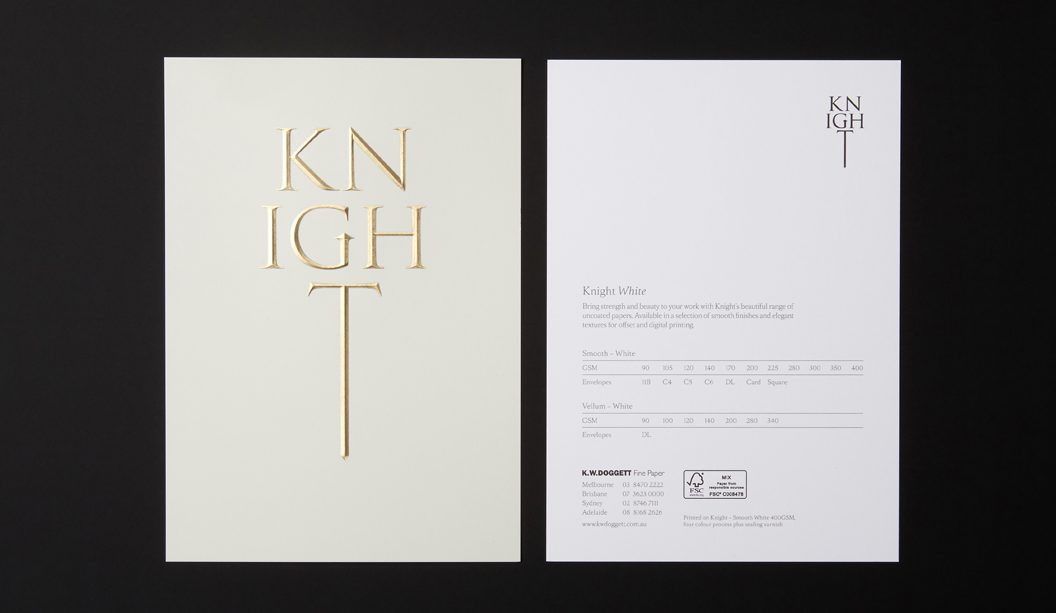
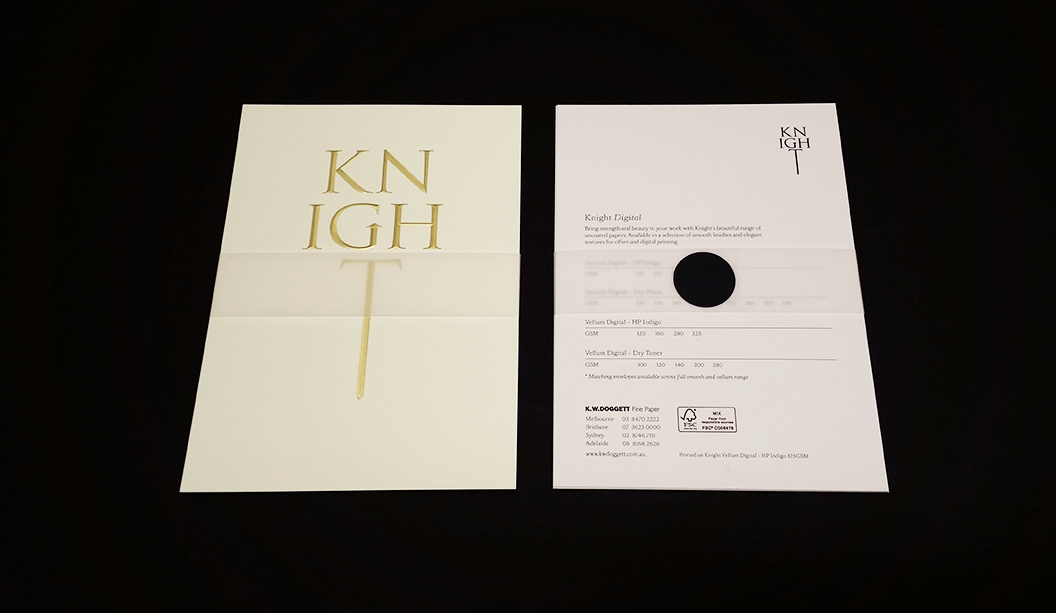
In our latest Knight campaign, we used a variety of print techniques. One of the most simple is the multi level or ‘raised’ emboss. A slightly different take on your standard emboss technique.
What is a raised emboss?
A raised or multi level emboss means the image or type area is raised to multiple levels to create a 3D type effect and in this case, with different depths.
What other kinds of embossing are there?
There is also blind embossing where you emboss the paper and leave it ‘as is’. The other option is to fill the indentation with ink or foil. You can also sculpt the die to have a bevelled edge which looks really good.
So it’s not a deboss?
That’s right, it’s not. A deboss means the surface is depressed instead of a raised impression which is what happens with embossing. So you inprint the image or type by pushing it into the paper (with embossing the impression is made from underneath).
Is it an expensive embellishment technique?
It can be pricey, depending on the area you want to embellish. The money is in the block that is made. So sometimes, if it suits the project, you’d get one block made and use it across different stationery items.
Is there anything I should avoid?
Make sure you allow for space in your design and also type, particularly with type because when your design is pressed into the paper, it will naturally appear closer together. For multi-level embossing use colour codes in your artwork to indicate various levels. Always best to speak to your printer before you deliver the files and find out how best to set them up. Also let them know what paper you are using.
Does it work better on some papers compared to others?
Long fibred papers don’t lend themselves too well to embossing but really, you can do it on both coated and uncoated paper with different results depending on the gsm, whether it’s textured etc. For example, an emboss may not turn out as deep on an coated paper due to a few things like the coating, but it still looks good. We used Knight Smooth Cream 250gsm in our promo and it worked a treat.
Do most printers do this type of work?
Some printers offer this service and usually, it’s the services of an embellisher you would seek. We used Avon in VIC in the case of the Knight promo. Call your paper specialist for the heads up on embellishers in your area.
Knight Smooth Cream 250gsm
• Foil produced by Avon
• Multilevel emboss with foil. 2 passes.
• Matt Gold 25
Did you know we stock synthetic products engineered for digital printing? Well, we sure do. In fact, we’ve got three absolute winners – PicoFilm, EnDURO and Tacky Dry Super Tuff Poly. They’re all high temperature resistant (meaning they won’t melt), durable, tear proof and weather resistant.
PicoFilm
A coated polyester (PET) that offers excellent colour reproduction, stiffness and trouble free feeding. This product is suitable for both Dry Toner and HP Indigo presses.
EnDURO
A high white paper laminate reinforced with a polypropylene (PP) or polyester (PET) film. Comes in ICE (PET – transparent) or Classic (PP – paper face). The ideal combination of paper feel, with the strength and printability of a synthetic. It’s easy to convert, has great printability and is easy to fold. Suitable for Dry Toner and HP Indigo presses.
Tacky Dry Super Tuff Poly
A polyester based, non adhesive paper with a white satin finish. Tacky Dry Super Tuff Poly has a soft tactile quality and comes in adhesive options too. Suitable for Dry Toner printing only.
Applications
There are so many uses for these products including point-of-sale, overlays, envelopes and protective jackets, maps, golf/membership cards, tags, entrance tickets, numbered bibs for sporting events, use-by dates for food, menus, personalised certificates, training manuals, blue prints, parking tickets, horticulture tags, boating maps and hotel door handle tags. Those and many more.
Follow the links above for more specifications, or call you trusty rep for more information.
Dust jacket: Knight Vellum 100gsm.
• 6 colour printed Dust Jacket in one pass on Heidelberg A1 press
• Conventional offset
• 2 spot colours are Pantone Purple and PMS 375
• The rest of the channels in the artwork are process CMYK.
• We swapped out the standard process colours for more vibrant options of:
– Swapped process cyan for ‘Process Blue’
– Swapped process magenta for ‘Rubine red
– Swapped process yellow for ‘PMS 012’
Cover: Knight Hammer 280gsm with Knight 140gsm ‘gold inlay’.
• No print
• Copper Staples done by Bambra
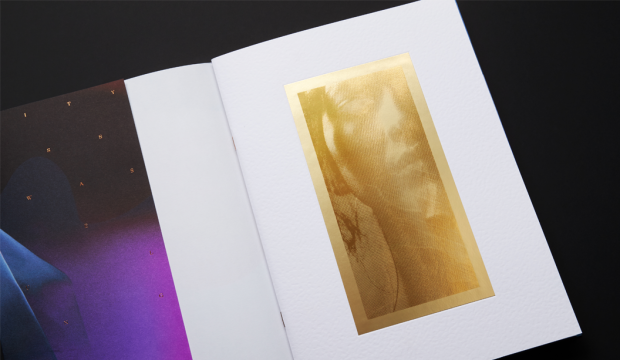
• Gold inlay in two foils over the top of each other
• Base foil is Matt Gold 429
• lmage foil Is Dark Mirror Gold 425
• Hammer cover has been debossed to fit gold inlay
Text: Knight Smooth, Cream 140gsm, Knight Smooth, White 140gsm, Knight Vellum, 140gsm.
• CMYK print throughout
• Pages 22/23 have bump plate 021U
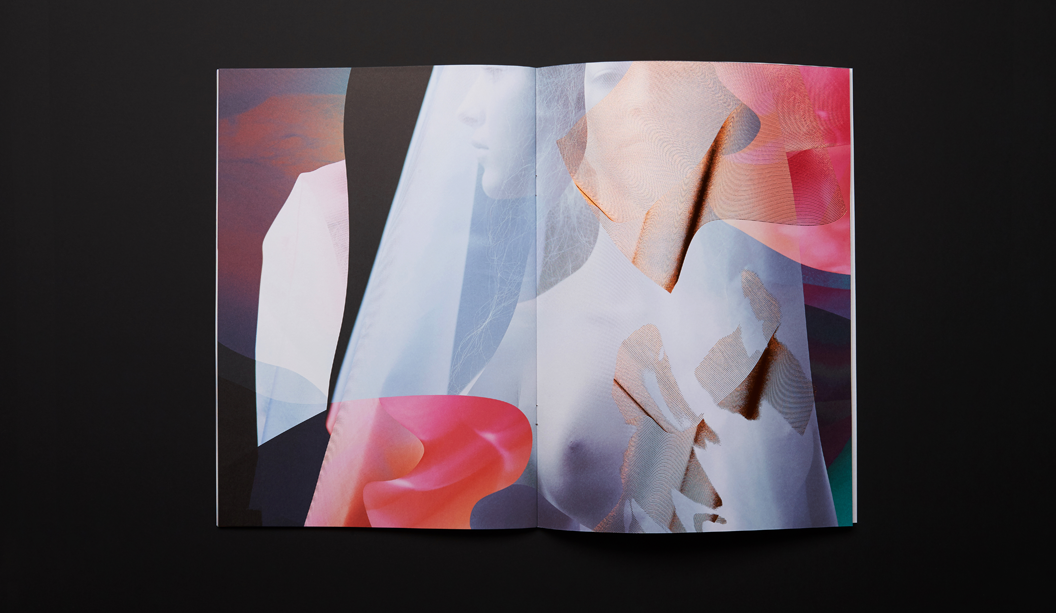
• Page 18/19 we 3D printed that piece of futuristic armor. Designed by RMIT student Amelia Agosta and printed in Melbourne by 3D objective
• Text is printed with a 400 Hybrid Screen. Part line screen and part stochastic
Postcards:
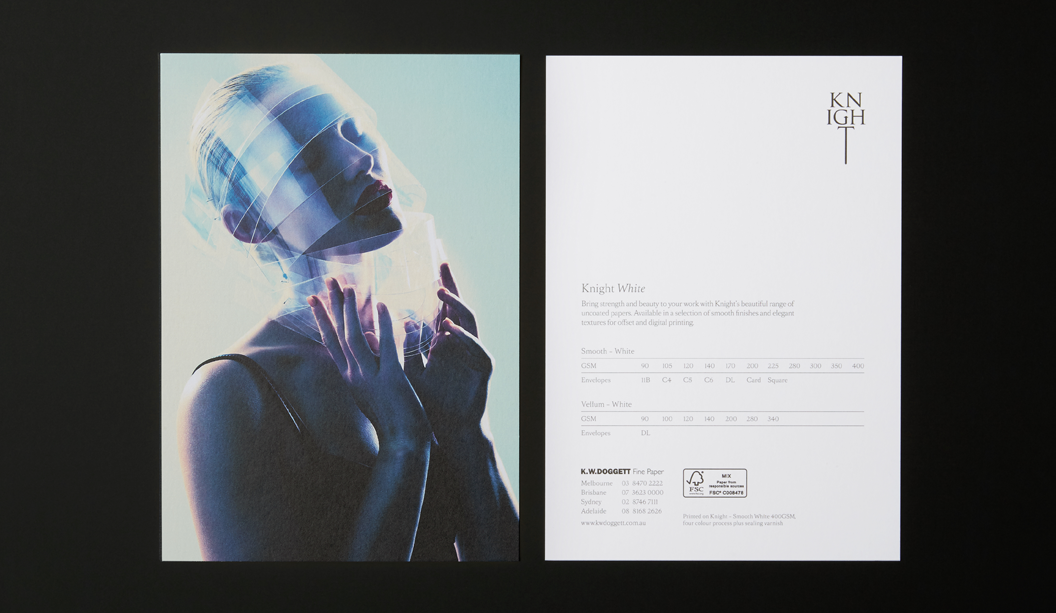
#1 Knight Smooth Cream 250gsm
• Black print only.
• Foil produced by Avon
• Multilevel emboss with foil. 2 passes.
• Matt Gold 25
Artist: Kevin Lincoln. Title: The eye’s mind.
Designer: Ben Cox. Publisher: Art Gallery of Ballarat. Stocks: Curious Matter Goya White 270gsm (cover), Grange Offset 135gsm (text). Printing specs: 4 colour offset + PMS grey on the back and spine of the dust jacket.
Feast your peepers on this collection of works by Australian artist Kevin Lincoln. With an impressive career spanning the decades, Kevin’s career although impressive isn’t widely known and yet has had a massive impact on the Australian art scene. So this 180 page publication not only accompanies his exhibition at the Art Gallery of Ballarat – the largest solo exhibition they’ve ever presented – but it’s also a highlight of the last 25 years of Kevin’s career which is described by The Art Almanac as poised, balanced and reflective.
The dust jacket is printed on textured Curious Matter Goya White 270gsm and the text pages are Grange Offset 135gsm. Production insight: the dust jacket is printed 4 colour offset with PMS grey on the back and spine. You have to feel this book to appreciate just how perfectly the paper complements the design. It couldn’t have been paired any better.
With an interesting foreword offering some perspective on Lincoln’s ‘impoverished and bruising childhood’, it becomes clear to see how his style has developed into a sea of greys and rural scenes. Exhibition Officer/Book Designer Ben Cox shares how he conveyed the tone of the works in the design of the book.
“The design of the catalogue aims to reflect the subtle, nuanced and understated surfaces that are key to Lincoln’s work. The use of tonal greys throughout, the weight and balance of pages, font selection and stock all come together and attempts to give a sense of Lincoln’s work. Particularly, we selected Curious Matter for the dust jacket stock as it matched perfectly the feel of Lincoln’s tactile, raw and beautifully elegant paint surfaces.” We think they’re a match made in heaven, too.
The exhibition ‘The eye’s mind’ runs at the Art Gallery of Ballarat from 23 April – 19 June 2016. You can get your mits on a copy of the book by calling the Gallery Shop on 03 5320 5790. They even have some signed limited edition copies. Hazah!
About the Gallery:
The Art Gallery of Ballarat is the oldest and one of the largest regional galleries in Australia. Founded in 1884 the gallery has expanded through numerous renovations and extensions, most recently in 2001, bringing 19th, 20th and 21st century architecture together. AGB houses one of the most significant collections of Australian art in the country, from early colonial to contemporary work. A vibrant temporary exhibition schedule complements the permanent collection and sees a large number of exhibitions in its four temporary galleries annually. They also have public programs, workshops, talks, concerts and many other events on the go.
Did you know we sell all sorts of sticky labels? Address, beer, wine, invite, closure and loads more. We’ve pretty much got labels for all types. One of our self adhesive ranges that’s exclusive to us is Wausau. It has loads of colours and finishes. Everything from metalised silver, gloss or matt, natural kraft, black vellum, eggshell, white or even fine mesh like texture finishes.
Wausau Estate #8 Vellum – Ever Opaque is our latest fave. An elegant, white face stock with a toothy, vellum finish used for prestigious wine, beer and spirits labelling. It’s a strong, durable, ‘wet strength’ label that maintains its opacity and adhesion (the fibres are less likely to separate so the integrity of the label is not compromised), even hours after immersion in an ice bucket. Say whaaaat?! The under laminate film stops the general creasing and bubbling you get with other uncoated labels. It also reduces the wet-out (transparent) look you can sometimes get. Winning!
If you find yourself working on a brief to create a boutique brew, wine or spirit label, Wausau Estate #8 Vellum – Ever Opaque now comes in SRA3 sheets for use on HP Indigo and Dry Toner presses (traditionally it’s a roll label product). Some pros of now being able to digitally print this label on a HP Indigo or Dry Toner press are:
– No minimum orders required so now you can do short runs.
– Cheaper in sheets than buying it as a roll.
– Come in both solid and split backs (if you need a special die cut, call us and we can sort out a manufacturing order).
If you’re one of our customers and have an ‘Adhesive Rolls’ swatch, check it out for some samples of the Wausau range. Or call you trusty rep for more information.
Not that long ago, adding bling like foil or opaque white ink to a print job was either too expensive or only available if you went to a particular printer. BUT! Now we’re going to give you the very good news. Adding embellishments on a minimal budget is more accessible. Embellishments may seem out of reach when you’re on a small budget, but we’re here to tell you the TOTAL opposite. Shock, horror, gasp. Here are five digital printing machines that can give you bling for minimal cost.
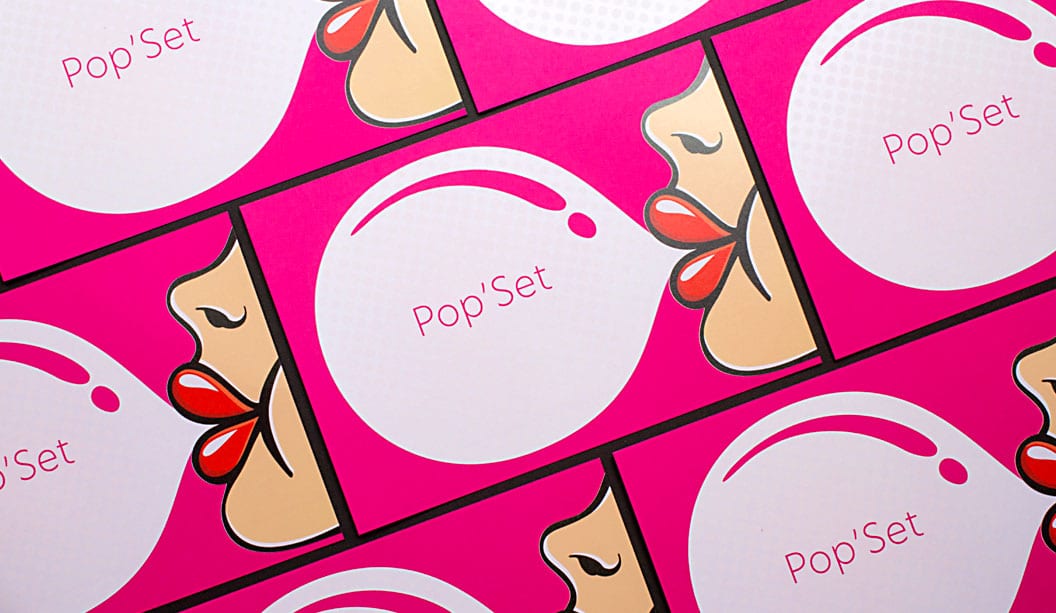
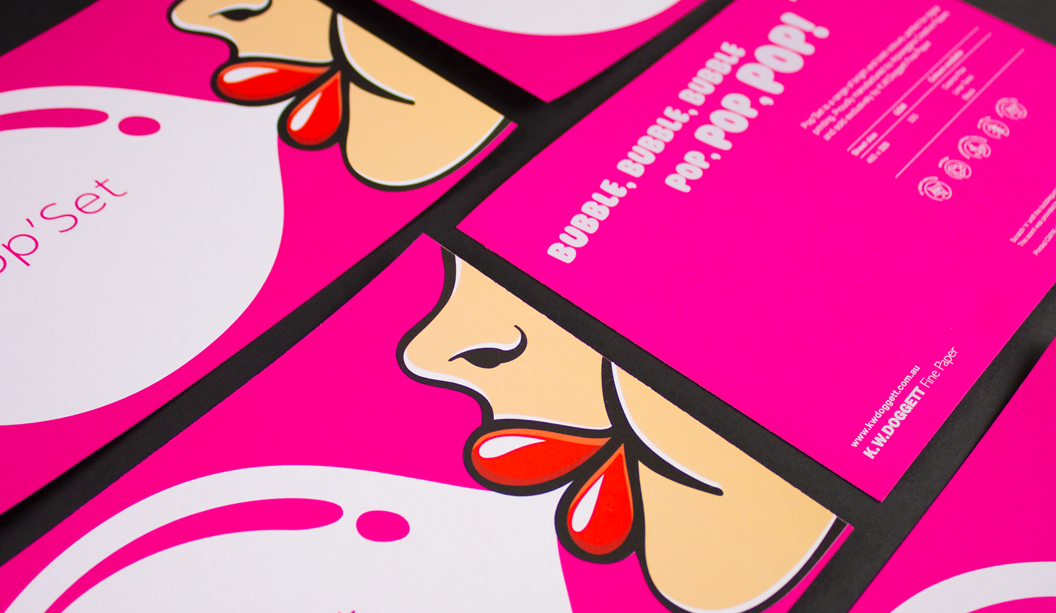
1. Opaque white ink is now available on HP Indigo presses 5500 and above ie the 5500/5600, 7600/7800. Please note that the B2 Indigo ie the HP Indigo 10000 press, doesn’t offer a white ink station. So you can do white ink on its own (see first and second pics below) or add CMYK over the top (refer to the Pop’Set Pink card below).
2. The OKI C711WT does white ink and can handle a large range of printing papers. We’ve seen it used on everything from Buffalo Board to Skin Curious Collection and even Tacky Dry Crystal Cling Clear Gloss (an electrostatic product you can use for window applications among other things). See pics in post.
3. Ricoh C7100X does white or clear ink and you can do multiple hits of the white in one pass without any concern for mis-registration.
4. Kodak NexPress does Gold Dry Ink or Clear. The NexPress colour charts have hundreds of shades of gold through to copper and many other colours too (see images at the end of this post).
5. Fuji Xerox Colour 1000i does Clear Dry Ink, Metallic Gold or Metallic Silver. Use this machine to replicate foil stamp, metallic, spot or flood effects.
Remember to contact your paper specialist for a heads up on printer(s) in your area. They may also have a print sample of the techniques mentioned above which they can show you.
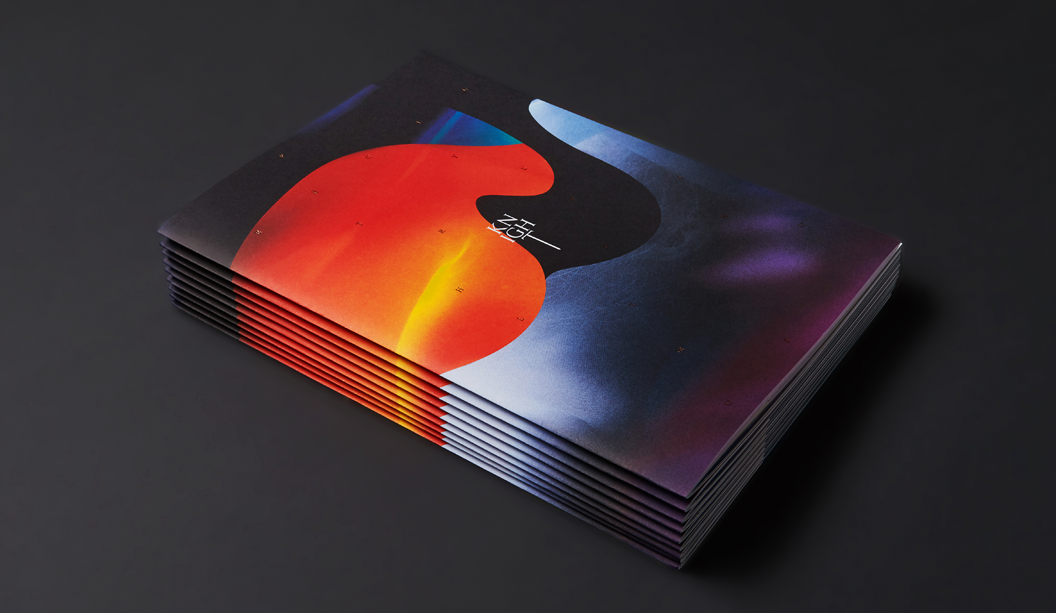
This is issue #8 of the Mohawk Maker Quarterly, designed by Hybrid Design and brought to you by one of our eminent mill partners – Mohawk. This issue is particularly special because it combines the Strathmore range and also Curious Collection which is from the Arjowiggins mill (Mohawk are now the North American suppliers of the Curious Collection range which makes us rather happy because we’re the Australian ones!). Maker is always a gift to the senses, a showcase of high quality printed matter in what is an increasingly digital era. It’s a real print treasure and celebration of creative, hands-on makers of this world.
Mohawk stands by the fact that embracing the medium is just as important as the message in creating an experience and building an emotional connection and with this issue, themed ‘Feel’, this premise is taken to a whole new level. This quote from the publication says it all: “Customers don’t necessarily remember what you do for them as much as they remember how you made them feel.”
We love the eight distinctive papers combined with a killer print job (offset printed using conventional and UV inks). They’ve boldly and cleverly combined half sheets, textured papers with photography, metallic papers with artworks and a deckled edge. The print medium, in our eyes at least, creates ‘feeling’ like not many other mediums can. Colour, texture, visuals. Print has the power to create a lasting memory and give anyone who loves design, print and paper all the feels.
Cover – What’s firstly most striking is Olimpia Zagnoli’s beautifully bold pattern illustration that blends so seamlessly with the Strathmore Wove Riveria Rose (one of four Strathmore Heritage Collection colours introduced in 2015). We don’t sell it but can look to order it for you, just keep in mind there would be a minimum order amount. Read this blog post by Parse and Parcel for an excellent read and print production tip when printing on dark coloured papers. Mohawk hit the sheet with opaque white ink, twice, then used UV inks which dry instantly and don’t soak into the sheet so are much more punchy.
Medium Rare – Music fans online go-to is pitchfork.com and they’ve just release a quarterly magazine – because there are some stories that just have to be told on paper. An online presence going offline. The travesty! Flies in the face of convention it does. The Pitchfork Review showcases the striking beauty of Curious Collection Metallics – Ice Gold, against vibrant images printed on Strathmore Premium Wove and Smooth – Platinum White. This is a fun spread. The half page looks rad.
Nature’s Calling – We stand by the choice to use uncoated papers for photography, as long as you prepare the files the right way and work with a printer that is willing to push it with you. A great example of how to make this combo work is the section on Kennett Mohrman which looks amazing on uncoated Strathmore Pastelle that has a felt finish. The mossy covered terrain appears as a double page spread printed partly on Strathmore Cambric that has a linen finish and the Strathmore Pastelle. Same photo across two different papers, one Platinum White the other Bright White. And geez it looks a-ma-zing! The photo is a beauty. So much depth and richness. The half sheet on Skin Curious Collection – Black printed with white ink even comes with augmented reality components.
Strathmore Archive – We absolutely love this double page spread called The Strathmore Archive. The team at Mohawk found all these swatches and print samples, boxed-up in their warehouse. Literally over 100 years of print design in America, discovered in some dusty boxes! The deckled edge. Swooooon.
Why Design Matters– Another half sheet and mixed paper goodness combo that gives us the design feels. Strathmore Premium Cambric (a linen finish) with Skin Curious Collection – Black and a half sheet thrown in for good measure. A perfect backdrop for Alain de Botton’s article on how objects make us feel – how good design can assist us with becoming even better versions of ourselves. As one blog mentions, the mid century illustrations look awesome printed on the linen sheet, as does the cathedral printed with red ink on the black. Clever.
The Movement – This is what the Maker does really well – covers some really talented champions of craft – small manufacturers, artisans, printers, designers and artists from around the world still using their skills in this so called age of the digital revolution. Our very own Australian brandDinosaur Designs even get a mention in this one! Other makers include Shelter Social Club, Penland School, Brothers & Craft, Sebastian Cox, Object and Totem and Adam Silverman. Plus there’s some more augmented reality to enjoy.
It is impossible to tell from this picture but the smart cookies at Hybrid and Mohawk have paired the photograph of this wooden sculpture with Curious Metallics – Ice Gold which literally has a gold shimmer finish. We’ve said it before and we’ll say it again. Clever.
And if this wasn’t enough for your senses, see more pics and another write-up here, via the Mohawk blog Felt & Wire.
Nutella wanted to build a lasting relationship with its customers and attach a sense of community to its iconic brand. To achieve this, they needed to make each customer feel special and trigger an emotive response that encouraged deeper connections with the brand.
The solution was to build a campaign that focused on personalisation with customers being given the opportunity to receive printed labels, or purchase personalised jars, that displayed their name in the trademark Nutella typography. The campaign has been a great success in Australia with hundreds of thousands of customers engaging with the novel idea and sharing images of their jars on social media.
OBJECTIVE:
To tap into the lucrative millennial market segment whilst also appealing to their core target market of families required Nutella to engage with their customers on a truly personal level. Nutella realised that a product offering which appealed to individuals was key to the campaign’s mass appeal and success. To do so, Nutella adopted a one-to-one marketing strategy which focused entirely on the concept of ‘Make Me Yours’ with customers invited to personalise their Nutella label.
“Given that millennials are all about mobility and digitisation, the ability to integrate innovative labelling and packaging with social media is paramount.”
Nutella announced through multiple social media platforms that, for a period of time, customers who purchased a special jar of Nutella could request a personalised label which could be wrapped around the jar, replacing the standard Nutella label.
The customer had to use an in-built Facebook app to scan the barcode on the Nutella jar and then type the name they wished to be used for their personalised label. The label would then be posted to the customer for them to stick onto their jar of Nutella. The accompanying letter encouraged people to upload photos of themselves with their personalised jars onto Nutella’s Facebook page and share the experience with friends through the #mynutella hashtag.
Originally, the campaign was due to last for a six week period creating a sense of urgency with Nutella fans who wanted to take advantage of the special offer. However, major retailer Myer saw the potential in offering the service in store as part of their ‘Giftorium’ Christmas campaign. Partnering with Ferrero (Nutella’s manufacturer) Myer offered shoppers the opportunity to instantly purchase personalised jars, with special printers being deployed to all stores in order to print the personalised labels.
RESULTS:
The initial campaign launch was very successful with hundreds of thousands of customers accessing the online app to receive personalised labels for their Nutella jars. Millennials quickly became Nutella’s greatest and most vocal advocates with thousands of customers using social media to propagate their recommendations to friends and family and upload images of their personalised Nutella jars.
For many, the concept was perfect to give to a friend or family member as a thoughtful and unique Christmas present. However, many would not have taken the steps required to receive the personalised labels via post, regardless of how perfect the gift may have been for its recipient.
This apparent shortfall in the deployment of the campaign was perfectly filled by retailer Myer’s ‘Giftorium’ Christmas campaign. Myer was the only retailer in Australia who offered the service and it featured heavily in all of their stores nationwide. The success of the in-store personalised Nutella jars was astounding and became the top-selling item for their Christmas period. Myer sold more than 400,000 personalised jars in Victoria alone with 50,000 being sold in their flagship store.
“The personalisation of interactions fosters greater customer loyalty which ultimately results in the holy grail of marketing – namely improved ROI.”
Gareth Pearson, CEO at BMi Research
CONCLUSION:
Over the past couple of years, the concept of mass personalisation has emerged as a powerful differentiator for brands who are eager to give their products a USP in increasingly competitive markets. Especially among millennials, who demand more from the brands they choose to engage with, offering a personalised experience is essential for developing customer loyalty. Combining the power of customised printed packaging with social media is a highly effective tactic for forging strong customer engagement.
Today’s consumers want to feel unique and by offering something personalised and affordable, brands can achieve this and reap the rewards. The trend towards personalised packaging and printed marketing material will no doubt continue to rise with marketers capturing and utilising more customer data than ever before. The ability of printers to adapt to these changes and offer personalised components to a brand’s product or service offering will become essential as marketers continue to seek evermore effective ways to engage with their customers.
Thanks to Kellie Northwood, Executive Director of VoPP/Two Sides Australia for allowing us to republish this case study, made available to us as Foundation Sponsors of TSA Limited, the publishers of the VoPP (Value of Paper and Print) report. Find out more via www.valueofpaperandprint.com.au.